
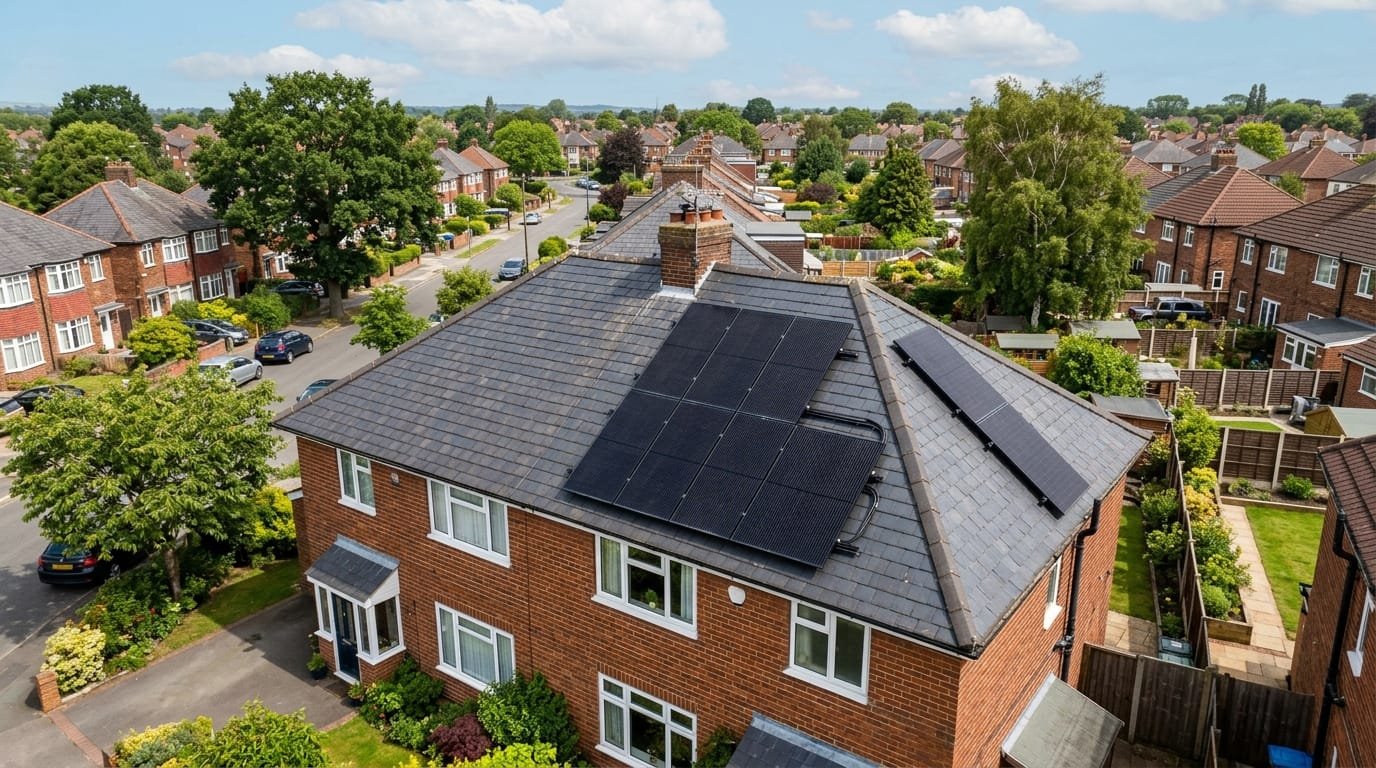
How Many Solar Panels Does Your Home Need?

Quick answer

Most UK homes need between 6 and 14 solar panels, depending on household electricity consumption, available roof space, panel wattage, roof direction and future energy plans.

A smaller household may only require a 2.5kW to 3kW solar panel system, while a larger property with higher electricity usage may benefit from a 4kW to 6kW domestic solar system.

However, the right number of panels is not based on property size alone. A professional solar assessment should consider how much electricity you use, when you use it and what you want your system to achieve.

How many solar panels do I need?

To estimate how many solar panels you need, start with your annual electricity consumption.

You can usually find this figure on your electricity bill or through your energy supplier’s online account. It is normally measured in kilowatt-hours, written as kWh.

As a general example:

  • A low-energy household may use around 2,000 kWh per year
  • An average household may use around 2,700 to 3,500 kWh per year
  • A larger or high-usage household may use 4,000 kWh or more per year

Your electricity usage provides the starting point for calculating your solar panel system size.

The aim is not always to generate every unit of electricity your home consumes. Your installer may instead design a system that produces as much useful electricity as possible within your available roof space and budget.

How to calculate your solar panel requirements

A simple way to calculate solar panel requirements is to divide the desired system capacity by the wattage of each panel.

For example, imagine you want a 4kW solar panel system and are considering 400W panels.

A 4kW system equals 4,000 watts.

4,000W ÷ 400W = 10 solar panels

In this example, your home would require approximately 10 panels.

Here are some additional examples:

Solar system sizePanel wattageApproximate number of panels
2.4kW400W6 panels
3.2kW400W8 panels
4kW400W10 panels
4.8kW400W12 panels
6kW400W15 panels

These figures are illustrative. The final design will depend on the exact panel model, roof layout, shading and expected performance at your property.

What determines the right solar panel system size?

Several factors influence the number of solar panels for a home.

1. Your household electricity usage

Your annual electricity consumption is one of the most important factors.

A home with two occupants, efficient appliances and relatively low daytime usage will usually need a smaller system than a family home with several occupants, electric heating, air conditioning or multiple high-energy appliances.

Your installer may also review your daily usage pattern. This matters because solar panels generate electricity during daylight hours.

Households that use more electricity during the day may be able to use a greater proportion of their solar energy directly.

2. Available roof space

Your roof may limit how many panels can be installed.

Solar panels need sufficient clear space away from obstacles such as:

  • Chimneys
  • Roof windows
  • Vents
  • Aerials
  • Dormers
  • Shaded sections
  • Roof edges

A larger roof does not automatically mean every section is suitable. The roof’s shape, condition and usable area must be assessed before calculating the final domestic solar system size.

Where roof space is limited, higher-wattage panels may allow you to generate more electricity from fewer panels.

3. Solar panel wattage

Panel wattage tells you the maximum amount of power a solar panel can produce under standard testing conditions.

A higher-wattage panel can generate more power than a lower-wattage panel of a similar size. This means a system using higher-output panels may require fewer individual panels.

However, wattage should not be considered in isolation. Panel efficiency, product quality, warranty, roof compatibility and long-term performance also matter.

A reputable installer should recommend panels based on the needs of your home rather than simply selecting the highest available wattage.

4. Roof direction and angle

In the UK, south-facing roofs often provide strong overall solar generation. However, east-facing and west-facing roofs can also work effectively.

An east-facing system tends to produce more electricity during the morning, while a west-facing system produces more later in the day. This can be helpful if your household uses more energy at particular times.

Roof pitch also affects performance. Solar panels can work across a range of roof angles, but the installer should calculate how the angle and orientation will influence expected annual generation.

A less favourable roof direction may require additional panels to achieve the same estimated output as a well-positioned system.

5. Shading around the property

Shade from nearby trees, buildings, chimneys and roof features can reduce solar generation.

Even partial shade may affect the output of certain panels during part of the day. Your solar survey should therefore assess both current shading and potential future changes.

The system may be designed around shaded areas, or use appropriate technology to help manage differences in panel performance.

Adding more panels is not always the best solution. Good system design is usually more valuable than simply filling the entire roof.

6. Your household goals

The correct number of solar panels also depends on what you want to achieve.

Your priorities might include:

  • Reducing electricity bills
  • Lowering reliance on the grid
  • Charging an electric vehicle
  • Supporting a heat pump
  • Storing energy in a home battery
  • Increasing household energy independence
  • Preparing for higher future electricity usage

For example, a household planning to purchase an electric vehicle may choose a larger solar panel system than it currently needs.

Designing around future requirements can be more practical than expanding the system later, although this must still be balanced against roof space, budget and local network requirements.

Should you install as many solar panels as possible?

Not necessarily.

Installing the maximum number of panels may increase total generation, but the system should still be appropriate for your property and energy usage.

An oversized system may export a larger proportion of its electricity to the grid rather than using it within the home. This is not always a problem, but it can affect the financial return compared with using solar electricity directly.

A properly sized system should balance:

  • Annual electricity consumption
  • Daytime energy demand
  • Available roof space
  • Export potential
  • Battery storage capacity
  • Installation budget
  • Future household needs

The best solar panel system size is the one that supports your goals without unnecessarily increasing cost.

How does battery storage affect solar system size?

Battery storage allows unused solar electricity generated during the day to be stored for later.

Without a battery, excess solar energy may be exported to the electricity grid. With a battery, more of that energy can potentially be used during the evening or overnight.

This may influence how many solar panels you decide to install.

For example, a household with a larger battery may choose a larger solar array to provide enough electricity for immediate daytime use and battery charging.

However, the battery and solar panels should be sized together. A battery that is too large may not charge fully during lower-generation periods, while a battery that is too small may regularly reach capacity before the panels have finished generating.

Can solar panels power your entire home?

Solar panels can supply a significant proportion of a home’s electricity, but generation changes throughout the day and year.

Output is generally higher during longer, brighter summer days and lower during winter. Solar panels also stop generating at night.

Your home will normally continue using electricity from the grid whenever solar generation and stored battery energy cannot meet demand.

The number of panels required to offset a large percentage of your annual electricity use will depend on your consumption, roof suitability and how effectively you use the electricity generated.

Why a professional solar survey matters

Online calculators can provide a useful estimate, but they cannot fully assess your property.

A professional solar survey should consider:

  • Electricity bills and annual usage
  • Roof dimensions and condition
  • Roof direction and pitch
  • Shading throughout the day
  • Panel placement
  • Inverter requirements
  • Battery storage options
  • Electrical infrastructure
  • Expected annual generation

You should then receive a proposed system size, estimated output and clear explanation of how the design was calculated.

Frequently asked questions

How many solar panels does an average UK home need?

Many UK homes may require approximately 8 to 12 panels, but the exact number depends on electricity consumption, panel wattage and roof suitability.

How many solar panels are needed for a 4kW system?

A 4kW system would require around 10 panels if each panel is rated at 400W. Different panel wattages will change the total number required.

Is a bigger solar panel system always better?

No. A larger system produces more electricity, but it should be matched to your energy usage, available roof space, battery capacity and budget.

Can I add more solar panels later?

It may be possible, but expanding an existing system can require changes to the inverter, wiring or permissions. Planning for future energy needs during the original installation is often simpler.

Do solar panels work on east-facing or west-facing roofs?

Yes. East-facing and west-facing roofs can still provide useful solar generation. They may also spread electricity production across the morning and afternoon.

Find the right solar panel system for your home

There is no single answer to the question, “How many solar panels do I need?”

The right number depends on your electricity usage, roof space, panel output, property orientation and long-term energy goals.

A tailored solar assessment will give you a more accurate recommendation than a generic estimate. It will also help ensure your domestic solar system is designed to provide reliable performance, practical energy savings and long-term value.

Share With Others

Contents