
Quick answer
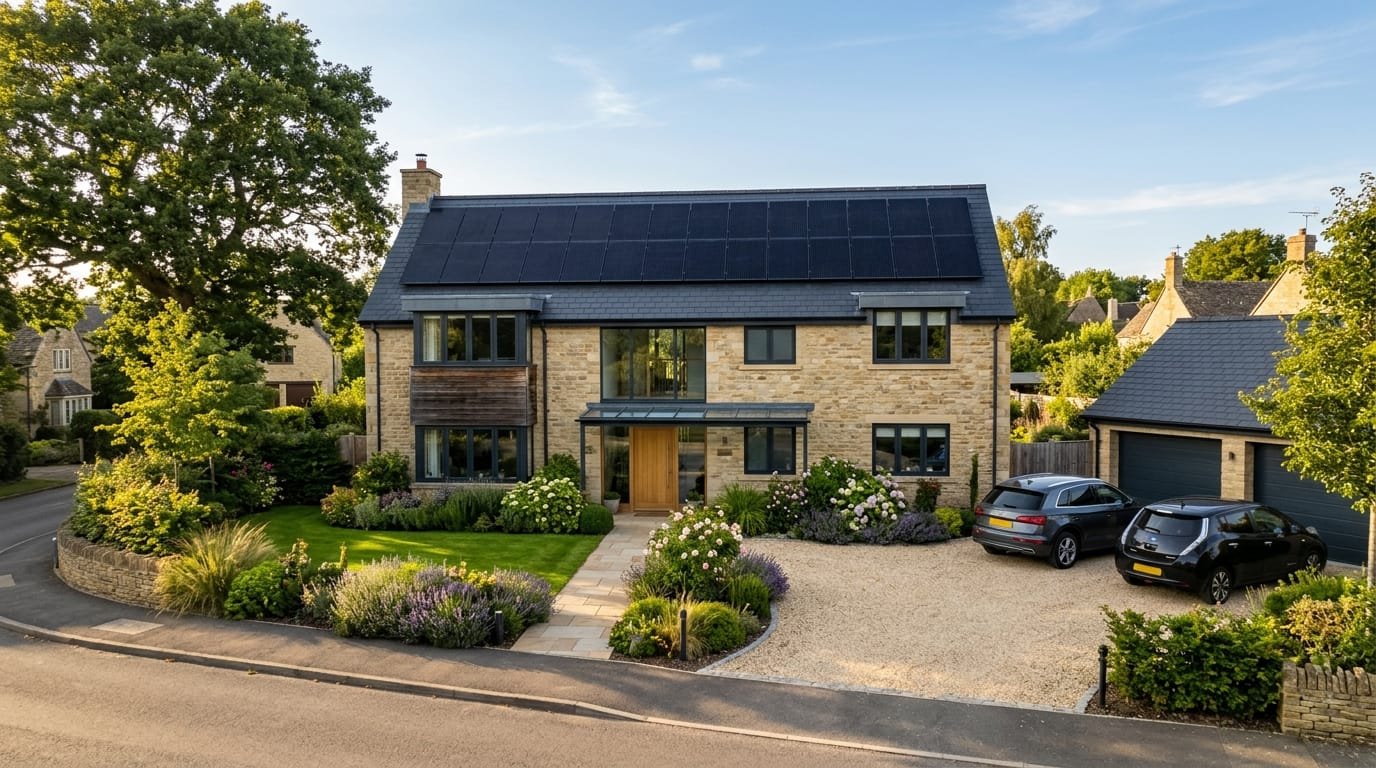
Solar panels can increase the appeal and potential value of a home by reducing electricity costs, improving energy efficiency and making the property more attractive to energy-conscious buyers.
However, there is no guaranteed percentage increase. The effect on property value depends on the age, condition and ownership of the solar panel system, the home’s location, its energy performance and current buyer demand.
Research discussed by the Royal Institution of Chartered Surveyors has identified property price premiums for homes with solar panels, including estimated increases of around 0.9% to 2% in one study and 2% to 3% in a later analysis of existing homes. These findings indicate that solar panels can contribute to value, but the actual result will vary between properties.
Do solar panels increase home value?
Solar panels may increase home value because they provide benefits that continue after the current homeowner moves out.
A buyer purchasing a home with an operational solar panel system could benefit from:
- Lower electricity bills
- Reduced reliance on grid electricity
- Improved household energy efficiency
- Payments for eligible exported electricity
- Lower environmental impact
- The option to add battery storage later
- Protection against some future energy price increases
Unlike decorative improvements, solar panels provide a practical benefit that can be measured through electricity generation and potential running-cost savings.
This can make a property more competitive, particularly when buyers compare similar homes with different energy costs.
How can solar panels make a property more attractive?
Lower household running costs
One of the main benefits of solar panels for homeowners is the opportunity to purchase less electricity from an energy supplier.
Electricity generated by the panels can be used within the home during daylight hours. The amount saved depends on the system’s output, household consumption and how much solar electricity is used directly.
The UK Government states that rooftop solar panels can reduce household energy bills, although the actual saving will depend on the property and how energy is used.
For buyers considering the full monthly cost of owning a home, lower electricity bills may make a solar-equipped property more appealing.
Improved energy efficiency
Energy efficiency has become an increasingly important consideration for homeowners and buyers.
An Energy Performance Certificate, commonly known as an EPC, shows how energy efficient a property is. A valid EPC must normally be available when a home is marketed for sale.
Solar panels can contribute to the overall energy performance of a property by generating renewable electricity on site. However, the final EPC rating will also be influenced by factors such as:
- Insulation
- Windows and doors
- Heating system
- Hot water system
- Lighting
- Property age
- Building construction
Solar panels should therefore be viewed as one part of a wider energy-efficient home rather than a replacement for insulation or an efficient heating system.
Greater appeal to energy-conscious buyers
Some buyers actively look for homes with lower running costs and renewable energy technology already installed.
A functioning solar panel system means the buyer may not need to arrange and fund a separate installation after moving in. This can make the property feel more complete and future-ready.
Solar panels may be particularly attractive to buyers who:
- Work from home during the day
- Own or plan to purchase an electric vehicle
- Want to add battery storage
- Are concerned about electricity prices
- Want to reduce their environmental impact
- Prefer energy-efficient home improvements
The panels may not be the main reason somebody purchases the property, but they can help differentiate it from similar homes nearby.
Potential export payments
Solar panels sometimes generate more electricity than the household can use immediately.
Eligible homeowners may be able to receive payments for electricity exported to the grid through the Smart Export Guarantee. Electricity suppliers set their own export rates, contract lengths and conditions.
A buyer may see this as an additional benefit, particularly when the system includes a suitable smart meter and the necessary installation documentation.
Sellers should avoid promising a specific export income because tariffs, household use and solar generation can change.
How much value can solar panels add?
There is no fixed amount that solar panels add to a property.
The increase may be influenced by:
- Local property prices
- Buyer demand
- Solar panel system size
- Annual electricity generation
- Panel age and condition
- Remaining warranty
- Roof condition
- Ownership arrangements
- Electricity savings
- Overall EPC rating
- Availability of installation documents
A modern, well-maintained and fully owned system is likely to be viewed more positively than an older system with limited records or unclear ownership.
Property value should also be assessed within the wider local market. A surveyor or estate agent with knowledge of comparable sales can provide a more suitable property-specific opinion.
What could prevent solar panels from adding value?
Solar panels do not automatically make every home more valuable.
Several issues can reduce their appeal or make the sale more complicated.
The panels are leased
Some older installations were provided through rent-a-roof arrangements. Under these agreements, a third party may own the panels and hold a lease over the roof space.
This does not necessarily prevent a sale, but the buyer’s solicitor and mortgage lender may need to review the agreement. UK Finance’s Lenders’ Handbook contains lender-specific requirements concerning solar panel leases, which means acceptability can vary between mortgage providers.
Homeowners should confirm who owns the system before marketing the property.
Missing documentation
A buyer may want evidence that the system was installed correctly and can continue operating safely.
Useful documents can include:
- MCS installation certificate
- Electrical certificates
- Planning or permitted development records
- Building Regulations information
- Panel and inverter warranties
- Installation invoice
- Maintenance records
- Export tariff information
- Ownership or lease agreements
- System performance data
MCS-certified installers are required to provide an MCS certificate following commissioning. This certificate can be important when applying for certain export tariffs and when demonstrating the installation’s credentials during a sale.
An ageing or poorly maintained system
Solar panels are designed for long-term use, but inverters and other components may require maintenance or replacement during the system’s lifetime.
An older system could concern buyers if:
- Generation has dropped significantly
- The inverter regularly displays errors
- Warranties have expired
- Monitoring no longer works
- Roof repairs are required
- Installation records are unavailable
Arranging a solar system inspection before selling can help identify faults and provide buyers with greater confidence.
Roof condition problems
Buyers may be less enthusiastic if the roof is likely to require major repairs soon after they move in.
Removing and reinstalling solar panels adds complexity to roof replacement work. Ideally, the condition of the roof should be assessed before a new solar installation is completed.
Where panels are already installed, sellers should disclose any known roof issues and provide records of relevant repairs.
Selling a house with solar panels
Good preparation can make selling a house with solar panels more straightforward.
Gather your paperwork
Collect the installation certificate, warranties, ownership records, maintenance history and export tariff details before the property is listed.
Confirm ownership
Establish whether you own the panels outright or whether a third-party agreement remains in place.
Your solicitor should be told about the system early, particularly if there is a roof lease or another legal arrangement.
Check system performance
Review your monitoring app and recent electricity generation. If output appears unusually low, arrange a professional inspection.
Explain the benefits accurately
Provide buyers with clear information about the system size, installation date and typical performance.
Avoid guaranteeing exact savings because electricity usage and tariffs will differ between households.
Update the EPC where appropriate
An up-to-date EPC can help buyers understand the property’s overall energy performance. Solar panels should be recorded accurately as part of the assessment.
Are solar panels a worthwhile home improvement?
Solar panels can be a valuable home improvement even when an immediate increase in selling price is not the main goal.
They can provide years of reduced electricity costs while the homeowner remains in the property. When the home is eventually sold, the system may also support buyer interest and strengthen the property’s energy-efficient credentials.
The strongest results are usually achieved when the solar installation is:
- Correctly designed
- Professionally installed
- Fully documented
- Properly maintained
- Appropriate for the roof
- Owned outright
- Still covered by useful warranties
Frequently asked questions
Do buyers prefer homes with solar panels?
Some buyers actively prefer properties with solar panels because of the potential for lower bills and improved energy efficiency. Other buyers may focus more on the age, ownership and condition of the system.
Do solar panels improve an EPC rating?
Solar panels can contribute positively to a home’s energy assessment, although the EPC rating also depends on insulation, heating, glazing and other property characteristics.
Is it harder to sell a house with solar panels?
Not normally when the panels are owned outright and the documentation is complete. Leased panels or unclear ownership arrangements may require additional legal and mortgage checks.
Can export payments transfer to a new owner?
Arrangements vary. The buyer may need to open a new export account and meet the supplier’s eligibility requirements. Any existing Feed-in Tariff or third-party agreement should be checked carefully during conveyancing.
Should I install solar panels just before selling?
Solar panels are generally a long-term home improvement. Installing them solely to achieve an immediate increase in sale price may not recover the full installation cost. Their value is usually strongest when the homeowner also benefits from electricity savings before selling.
Making your home more energy efficient and appealing
So, can solar panels increase the value of your home?
They can improve its appeal and may contribute to a higher selling price, particularly when the system reduces running costs, supports a stronger energy rating and is owned, maintained and documented correctly.
However, solar panels should not be treated as a guaranteed way to add a fixed percentage to a property’s value. The outcome will depend on the installation and the local housing market.
A high-quality domestic solar system can still provide benefits before and during a future sale by lowering electricity costs, improving energy efficiency and giving buyers access to renewable electricity from the day they move in.